
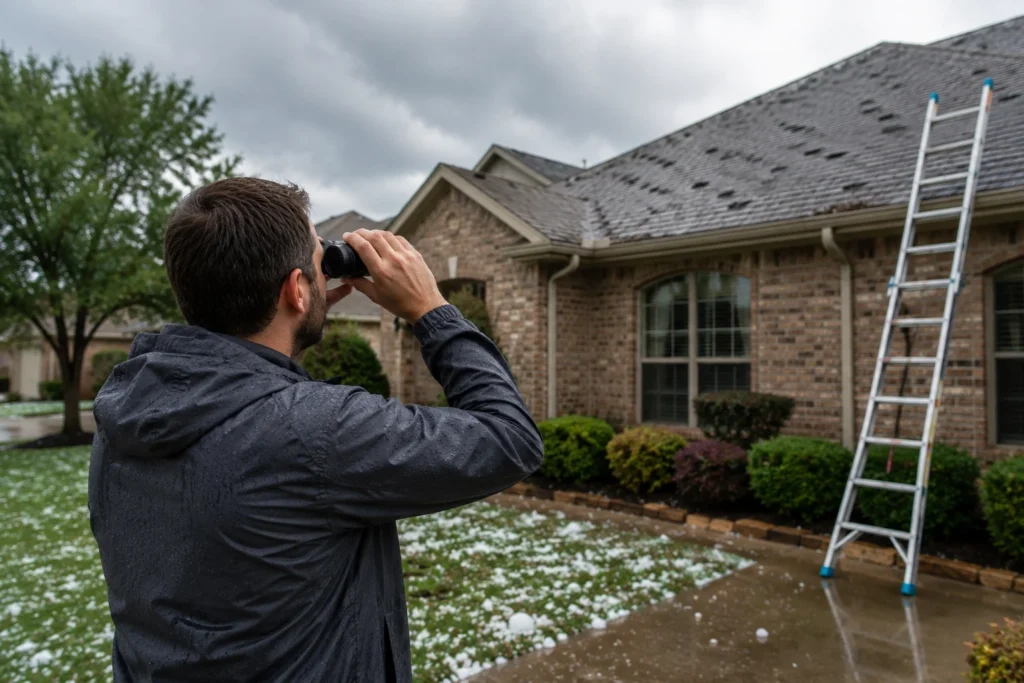
Hailstorms move fast. One moment the sky looks normal. Ten minutes later, your roof may already be compromised. That is exactly why learning how to document hail damage for an insurance claim matters before you ever hire a contractor, roofer, or public adjuster.
Documentation changes everything. It affects whether damage gets noticed. Whether missing items get included. Whether disputes become manageable or spiral into months of frustration. The homeowners who build organized evidence early usually place themselves in much stronger positions during negotiations. And honestly? Most people under-document the damage. They take three blurry photos. Forget the gutters. Ignore the attic. Toss receipts into random drawers. Then weeks later they struggle to prove the full scope of the loss.
That creates problems. Especially in storm-prone regions like Brownsville, where severe weather can hit quickly and multiple homes may file claims at the same time. This guide breaks down exactly how to document hail damage for an insurance claim the right way. Step by step. Practical. Organized. Actionable. Because strong claims are built on evidence. Not assumptions.
Why Documentation Matters So Much
Insurance companies rely heavily on documentation. More than many homeowners realize. A roof may absolutely have hail damage. But if the evidence is incomplete, unclear, or poorly organized, portions of the claim can become disputed later. That happens constantly.
The strongest claims usually contain:
- Clear photographs
- Storm verification
- Detailed timelines
- Inspection reports
- Interior evidence
- Organized communication records
- Repair documentation
Weak claims usually contain scattered information and missing proof. That difference matters.
Especially when discussions begin around:
- Scope of damage
- Repair pricing
- Matching issues
- Interior water intrusion
- Code upgrades
- Supplemental damage
Good documentation also protects you if additional problems appear later. And they often do. Leaks sometimes show up weeks after the storm. Moisture spreads slowly. Underlayment failures are not always immediately visible. Without early documentation, proving causation becomes harder.
Safety Comes First
Before taking photos or climbing ladders, stop and think carefully. Seriously. Many homeowners get injured trying to inspect roofs after hailstorms. Wet shingles are dangerous. Metal surfaces become slippery. Structural weaknesses may not be visible from the ground. Do not rush onto the roof.
Instead, begin with safer inspection methods:
- Walk the property perimeter
- Use binoculars
- Use your phone zoom
- Inspect gutters and downspouts
- Look for collateral damage first
If you suspect significant damage, schedule a professional inspection instead of risking injury. No insurance claim is worth a hospital visit.
Document the Storm Itself
One of the smartest things homeowners can do is document the actual storm event. This step gets overlooked constantly.
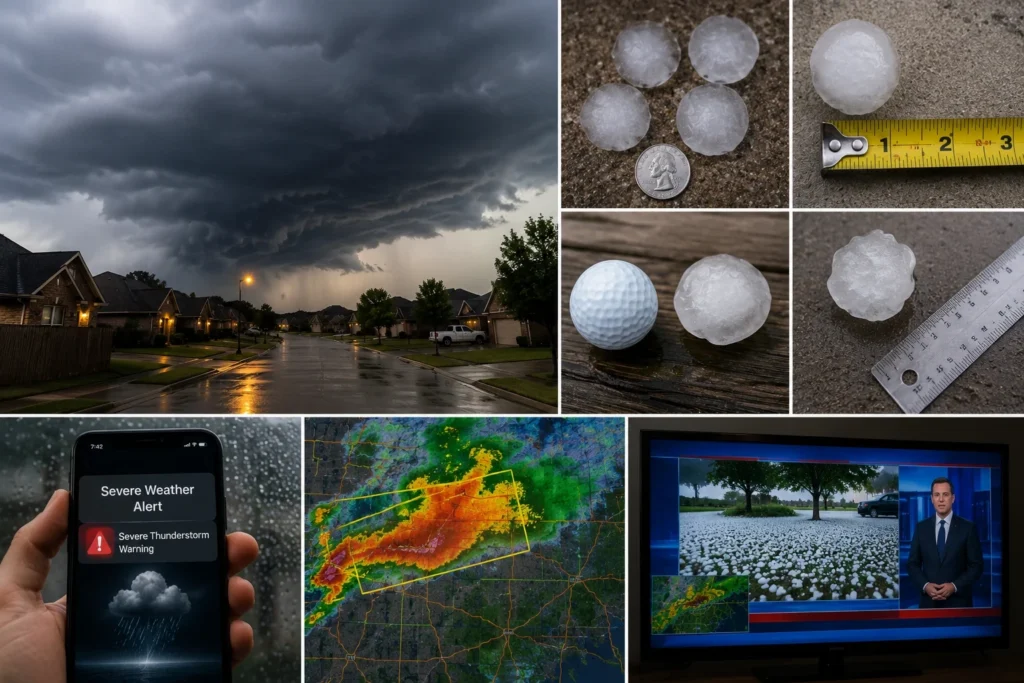
Start by recording:
| Information to Save | Why It Matters |
| Storm date | Establishes timeline |
| Approximate hail size | Supports damage severity |
| Weather alerts | Verifies storm activity |
| Radar screenshots | Helps prove storm path |
| Local news coverage | Adds supporting evidence |
| Photos of hailstones | Shows impact potential |
Take photos of hailstones next to common objects for size reference:
- Coins
- Tape measures
- Golf balls
- Rulers
Do this quickly before melting occurs. Storm verification becomes especially important if insurers later argue the damage was old or unrelated. Homeowners in Brownsville sometimes experience overlapping weather events during storm seasons. Organized storm records help separate one event from another. That matters more than people think.
Start With Wide-Angle Photos
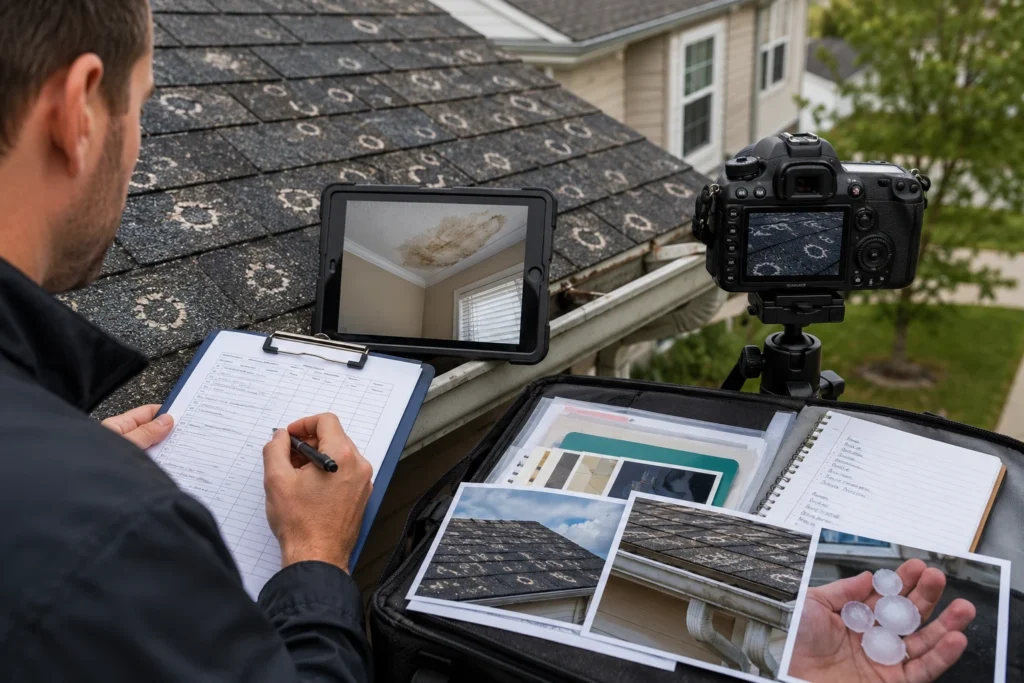
When learning how to document hail damage for an insurance claim, wide-angle photos should come first. Not close-ups. This is one of the biggest mistakes homeowners make. Close-ups show damage details. Wide-angle shots establish context. You need both.
Photograph:
- Entire roof elevations
- Front of the home
- Rear elevation
- Side elevations
- Garage doors
- Gutters
- Downspouts
- Windows
- Fences
- Decks
- HVAC units
Walk slowly around the property. Take more photos than you think you need. Then take more. Digital storage is cheap. Missing evidence is expensive.
Capture Detailed Close-Up Damage Photos
Now move closer. This is where the real evidence begins building. Different roofing materials show hail damage differently.
Asphalt Shingle Damage
Look for:
- Circular bruising
- Granule loss
- Dark impact spots
- Creased shingles
- Exposed matting
Take photos from multiple angles. Lighting changes visibility dramatically.
Metal Roof Damage
Look for:
- Dents
- Coating fractures
- Impact marks
- Bent seams
- Soft metal damage
Pay special attention to vents and flashing.
Tile Roof Damage
Look for:
- Cracks
- Chipped corners
- Broken edges
- Surface fractures
Tile damage is sometimes subtle. Hairline fractures matter.
Flat Roof Systems
Look for:
- Membrane punctures
- Seam separation
- Pooling areas
- Surface fractures
Flat roof documentation often requires professional inspection support.
Do Not Ignore Collateral Damage
This section is huge. Collateral damage often strengthens the overall claim dramatically because it helps establish storm intensity.
Photograph:
- Gutters
- Downspouts
- Window screens
- Mailboxes
- Air conditioner fins
- Patio furniture
- Siding
- Fence staining
- Outdoor lighting
- Vehicles
Soft metals are especially important. Why? Because hail impacts appear clearly on softer surfaces, helping support roof damage arguments. Experienced adjusters look for this immediately. And frankly, homeowners should too.
Interior Damage Matters More Than You Think
Some homeowners only focus on exterior roof damage. That is a mistake. Interior evidence can become some of the strongest claim support available.
Inspect:
- Ceilings
- Attics
- Wall corners
- Around vents
- Skylights
- Chimney areas
- Insulation
- Light fixtures
Look for:
- Water staining
- Bubbling paint
- Moisture
- Mold odors
- Dripping water
- Damp insulation
Document everything immediately. Even minor stains matter. Small leaks can become major repairs later.
How to Take Insurance-Friendly Photos
Not all photos carry equal value. Some become extremely persuasive. Others are nearly useless. Here are practical ways to improve your documentation quality:
Use Daylight
Natural lighting reveals impacts more clearly than flash photography. Early morning or late afternoon lighting often works best.
Take Multiple Angles
One angle may hide damage entirely. Move around the impact point. Photograph from different directions.
Include Context
Take one wider shot before close-ups. This helps identify the damage location later.
Avoid Blurry Images
Simple. But incredibly common. Take steady shots. Review images before moving on.
Enable Timestamps
Timestamped photos strengthen credibility.
Organize Immediately
Create folders such as:
- Roof slopes
- Gutters
- Interior leaks
- HVAC damage
- Storm verification
Organization saves enormous time later.
Video Documentation Is Extremely Helpful
Photos freeze details. Videos capture context. Both matter.
Create slow walkthrough videos showing:
- Roof elevations
- Active leaks
- Ceiling staining
- Damaged gutters
- Exterior impacts
- Water intrusion
Narrate while filming.
Describe:
- Date
- Location
- What you are seeing
- When damage appeared
This creates a stronger evidence trail later. Especially if disputes develop.
Create a Written Damage Log
This may sound boring. It is not. A written claim journal can become one of the most valuable tools during the claim process.
Document:
| Item | Example |
| Storm date | April 18, 2026 |
| Damage discovered | Same evening |
| Leak locations | Kitchen ceiling |
| Temporary repairs | Tarp installed |
| Contractor visits | Dates and findings |
| Insurance calls | Representative names |
| Emails sent | Save copies |
Claims become messy quickly. Phone calls pile up. Adjusters change. Deadlines shift. Written logs reduce confusion enormously. I strongly recommend keeping everything in one folder. Physical or digital. Either works. Just stay organized.
Temporary Repairs Without Hurting Your Claim
Homeowners often panic after storms. Understandably. But careless repairs sometimes damage the claim itself. Here is the proper approach:
Photograph Everything First
Always document damage before repairs begin. Always.
Perform Emergency Mitigation Only
Temporary tarping is usually acceptable. Major permanent repairs before inspection can create complications.
Save Every Receipt
Keep receipts for:
- Tarps
- Emergency labor
- Water extraction
- Temporary materials
Avoid Throwing Away Damaged Materials
Do not discard broken shingles or damaged components immediately. Insurers may want inspection access later.
Professional Roof Inspections Matter
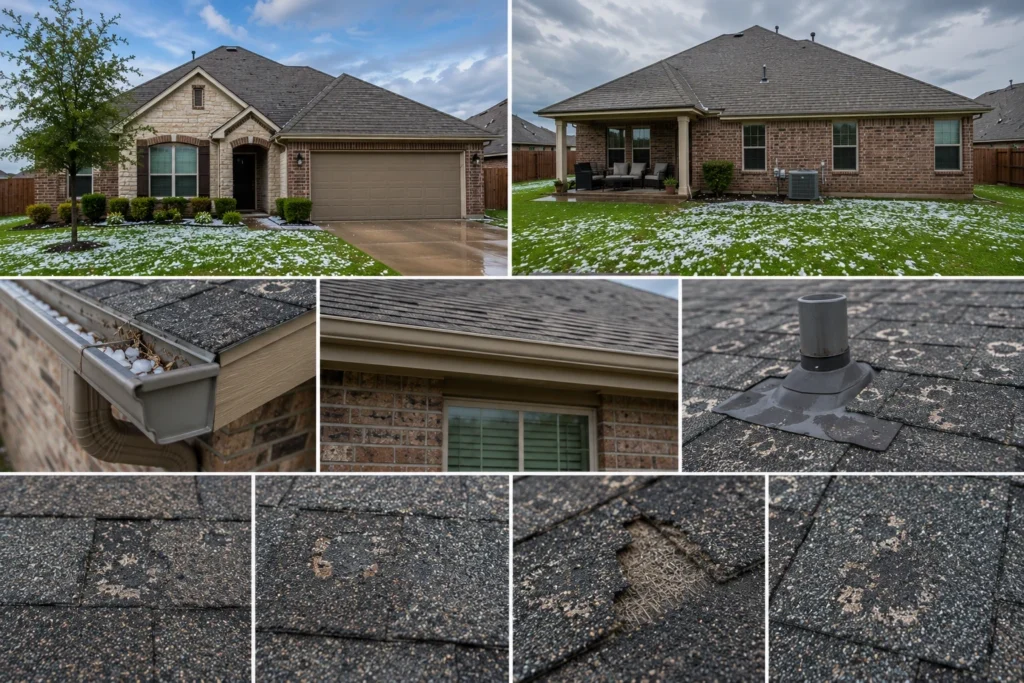
Learning how to document hail damage for an insurance claim does not mean homeowners must handle everything alone. Professional inspections add credibility and technical detail. Especially when hidden damage exists.
Strong inspection reports often include:
- Roof measurements
- Damage mapping
- Photo reports
- Material identification
- Moisture readings
- Drone imagery
- Repair recommendations
Experienced storm inspectors also identify subtle damage homeowners miss. And honestly, hidden damage is common. Especially after larger hail events.
Drone Reports and Modern Documentation Tools
Technology has changed storm documentation significantly.
Today many inspectors use:
- Drone photography
- Satellite measurements
- Moisture detection tools
- Digital roof mapping
- Thermal imaging
These tools create stronger documentation packages. Particularly for steep roofs or commercial properties. Drone imagery can also help show slope-wide damage patterns that individual close-ups fail to capture. That becomes valuable during disputes.
Common Documentation Mistakes That Hurt Claims
This section may save homeowners thousands of dollars. Here are the mistakes that create problems most often.
Waiting Too Long
Time weakens evidence. Water dries. Materials deteriorate. Damage becomes harder to trace. Document quickly.
Taking Too Few Photos
Three photos are not enough. Take dozens. Then organize them.
Ignoring Interior Damage
Small leaks become major arguments later. Document them early.
Failing to Save Communication
Keep emails. Save texts. Record call dates. Documentation is not only physical damage. It is communication too.
Throwing Away Materials
Damaged shingles may become important evidence later.
Poor File Organization
Scattered photos create confusion. Create folders immediately.
How Insurance Companies Evaluate Hail Claims
Insurance adjusters look for consistency. That matters enormously.
They compare:
- Storm dates
- Damage patterns
- Roof condition
- Material age
- Collateral impacts
- Interior evidence
- Inspection reports
If the documentation conflicts, questions arise.
For example:
- Fresh roof damage but no collateral impacts
- Leak claims with no moisture evidence
- Missing storm timeline
- Photos without context
Strong claims tell a consistent story from beginning to end. Weak claims feel incomplete.
Understanding Wear and Tear Arguments
This is one of the most common disputes in hail claims.
Insurance companies may argue portions of the roof show:
- Aging
- Thermal cracking
- Foot traffic
- Manufacturing defects
- Normal wear
That is why organized storm documentation matters so much.
Especially:
- Fresh collateral impacts
- Storm-date records
- Consistent roof damage patterns
- Timely inspections
The earlier evidence gets captured, the stronger the causation argument usually becomes.
What If the Insurance Estimate Looks Too Low?
This happens constantly. And many homeowners do not realize they can challenge incomplete scopes. Carefully review the estimate.
Look for missing items such as:
- Flashing
- Starter shingles
- Ridge materials
- Gutters
- Vent replacement
- Code items
- Underlayment
- Drip edge
Compare contractor findings carefully.
If discrepancies appear:
- Request clarification
- Submit additional evidence
- Ask for reinspection
- Provide supplemental documentation
Organization becomes critical here. The better your evidence package, the stronger your negotiating position usually becomes.
Public Adjuster vs Insurance Adjuster for Hail Claims in Texas
This distinction matters. Insurance adjusters represent the carrier. Public adjusters represent policyholders. Their documentation approaches often differ significantly.
Public adjusters typically focus heavily on:
- Detailed photo evidence
- Scope completeness
- Missing line items
- Supplemental support
- Negotiation documentation
That does not automatically mean conflict exists. But it does mean homeowners should understand who represents which side. Complex claims sometimes require additional support.
Especially when disputes involve:
- Large losses
- Denials
- Underpayments
- Multiple structures
- Commercial buildings
- Repeated inspections
For many homeowners in Brownsville, learning how to document hail damage for an insurance claim before hiring anyone creates a much stronger starting position. Knowledge matters. Preparation matters more.
A Simple Step-by-Step Documentation Workflow
Here is a practical process homeowners can follow immediately after a hailstorm.
| Step | Action |
| 1 | Photograph hailstones |
| 2 | Save weather reports |
| 3 | Take wide-angle property photos |
| 4 | Capture close-up damage |
| 5 | Inspect interior areas |
| 6 | Record videos |
| 7 | Create written log |
| 8 | Save receipts |
| 9 | Schedule inspection |
| 10 | Organize digital files |
Simple systems reduce chaos. And storm claims become chaotic fast.
The Importance of Organized Digital Storage
This sounds small. It is not. Disorganized files delay claims constantly.
Create folders such as:
- Storm evidence
- Roof photos
- Interior leaks
- Inspection reports
- Insurance correspondence
- Receipts
- Repair estimates
Back everything up.
Use:
- Cloud storage
- External drives
- Email backups
Do not rely only on your phone. Phones get damaged. Files disappear. Redundancy matters.
Why Documentation Protects Long-Term Property Value
This is bigger than the immediate claim. Poorly documented storm damage can affect:
- Future home sales
- Inspection reports
- Warranty claims
- Future insurance applications
- Hidden moisture problems
Strong documentation creates a property history. That protects homeowners later. Especially if additional issues emerge years afterward. And unfortunately, that happens more often than many people realize.
Practical Tips Homeowners Often Overlook
Here are several small strategies that create surprisingly large advantages.
Photograph Serial Numbers
Especially for HVAC systems and exterior equipment.
Save Old Roof Records
Previous inspections help establish pre-loss condition.
Keep Contractor Business Cards
You may need them later during disputes.
Screenshot Important Emails
Never assume email systems are permanent.
Use Consistent File Names
Example:
- NorthSlope_Damage_1
- Garage_Gutter_Impact_2
- KitchenLeak_Ceiling_3
Organization saves time during stressful situations.
How to Prepare for the Insurance Adjuster Inspection
One of the most overlooked parts of learning how to document hail damage for an insurance claim is preparing for the actual adjuster visit. This inspection matters enormously. The adjuster may only spend a limited amount of time at the property. Sometimes inspections move quickly, especially after widespread storms when carriers are handling large claim volumes across entire regions. Preparation helps homeowners avoid missed details.
Before the inspection:
- Organize all photos into folders
- Print key images if possible
- Create a written damage summary
- Prepare contractor reports
- Keep receipts accessible
- Create a list of visible concerns
Walk the property beforehand. Do not assume the adjuster will automatically notice everything.
Point out:
- Interior staining
- Gutters with impacts
- HVAC fin damage
- Fence staining
- Soft metal dents
- Areas where leaks appeared
Stay calm during the inspection. Professional. Organized. Factual. That approach usually works far better than emotional arguments.
Questions Homeowners Should Ask During the Inspection
Many homeowners stay silent during inspections because they feel intimidated. You should absolutely ask questions.
Reasonable questions include:
| Question | Why It Matters |
| Which slopes show hail impacts? | Clarifies scope |
| Are accessories included? | Prevents omissions |
| Will interior moisture be evaluated? | Helps protect hidden damage |
| Are code items being considered? | Important for repair costs |
| Will additional documentation help? | Opens supplement discussions |
Take notes during the conversation.
Document:
- Inspector name
- Date and time
- Statements made
- Areas inspected
- Areas skipped
These notes may become valuable later if disagreements develop.
Why Timing Impacts Claim Strength
Timing affects almost every aspect of a hail claim. The longer damage sits undocumented, the more difficult certain arguments become.
Here is why:
Water Damage Evolves
Leaks spread. Moisture travels. What begins as a small attic stain may eventually damage insulation, framing, drywall, flooring, and electrical systems. Early photos establish the starting point.
Roof Conditions Change Over Time
Sun exposure, wind, debris, and additional storms can alter roof conditions quickly. That creates opportunities for disputes involving:
- Old damage
- New damage
- Wear and tear
- Deferred maintenance
Prompt documentation helps separate these issues.
Contractors Become Busier
After major hailstorms, reputable roofing contractors often become booked quickly. Delays may slow inspections and repairs. That is another reason homeowners in Brownsville should begin documentation immediately after severe weather events. Fast organization creates advantages later.
How Supplements Become Part of Hail Claims
Many homeowners assume the first insurance estimate is final. It often is not. Supplemental claims are extremely common in hail losses. Especially when hidden damage appears during repairs.
Examples include:
- Rotten decking
- Additional flashing damage
- Ventilation issues
- Code upgrades
- Underlayment replacement
- Improper prior installations
- Water intrusion beneath surface materials
This is another reason detailed documentation matters from the beginning. Supplement requests rely heavily on evidence. The stronger the documentation package, the easier it becomes to justify additional repair items later.
What Helps Support Supplements
Strong supplement documentation often includes:
- Progress photos
- Contractor findings
- Open-roof photos
- Material measurements
- Moisture readings
- Code references
- Updated estimates
Organization matters here too. Sloppy supplements tend to create delays. Detailed supplements create clarity.
Why Communication Records Matter So Much
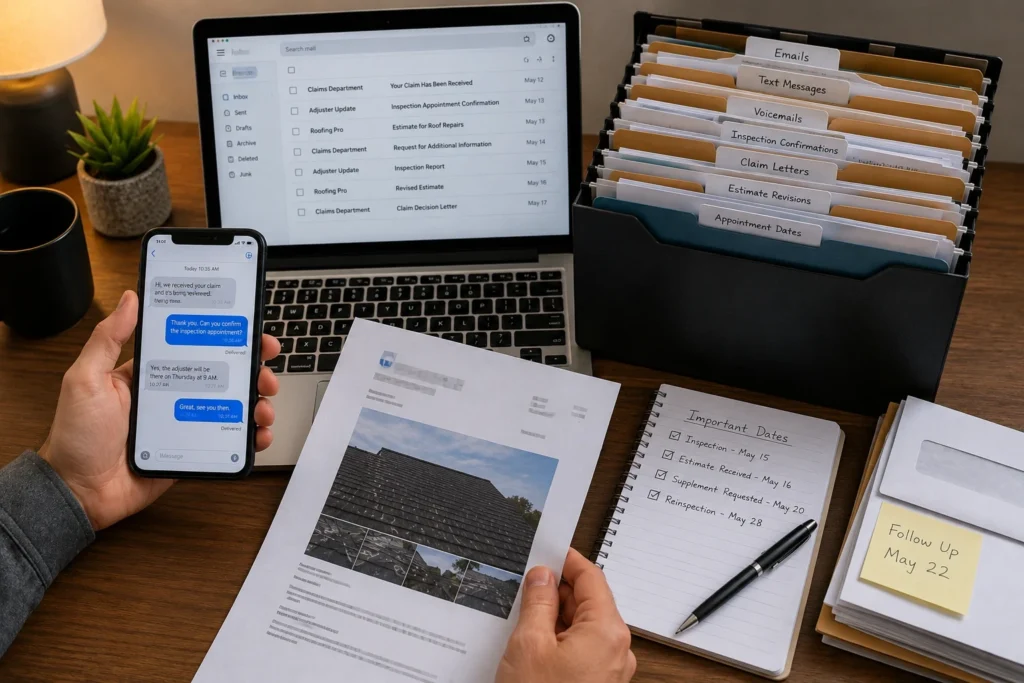
Many claim disputes are not caused by missing roof damage. They are caused by missing communication records. That surprises homeowners constantly. Save everything. Seriously. Everything.
That includes:
- Emails
- Text messages
- Voicemails
- Inspection confirmations
- Claim letters
- Estimate revisions
- Appointment dates
Create one dedicated folder. Simple organization prevents enormous confusion later.
Especially if:
- Adjusters change
- Contractors change
- Supplemental requests appear
- Reinspections occur
Documentation is not only about physical damage. It is also about process history.
Additional Technical Insight
Severe hailstorms can create complicated structural assessment challenges, especially when hidden moisture intrusion develops beneath roofing materials. In some situations, the evaluation process becomes almost heuristic because inspectors must combine visible evidence, storm timing, and material behavior patterns to determine the full scope of damage accurately.
Long-Tail Keyword Section
Homeowners researching Hail Damage Roof Insurance Claim: How to Protect Your Roof should understand that strong documentation often begins long before negotiations with the insurance company ever start. The earlier evidence gets collected and organized, the stronger the overall claim position usually becomes.
When to Seek Additional Help
Some claims become complicated quickly.
Especially when:
- Multiple inspections disagree
- Leaks worsen
- Damage spreads
- The estimate feels incomplete
- The claim gets delayed
- Coverage questions appear
At that point, additional professional guidance may become valuable. The earlier strong evidence gets built, the easier those conversations usually become. That is why understanding how to document hail damage for an insurance claim before disputes arise is so important. Preparation changes outcomes.
Final Thoughts
The homeowners who usually place themselves in the strongest position during hail claims are not necessarily the loudest homeowners. They are the most organized. They document quickly. They photograph thoroughly. They save records carefully. They stay consistent. And they understand that strong evidence often determines how smoothly the claim process unfolds.
Hail damage claims are stressful. There is no way around that. But confusion decreases dramatically when homeowners create organized documentation from the beginning. Especially in active storm regions like Brownsville, where fast-moving weather systems can create widespread roofing damage across entire neighborhoods. Take your time. Document carefully. Stay organized. Ask questions early.
And remember this:
A well-documented claim is often far easier to negotiate than a poorly documented one. That single difference can shape the entire outcome of the insurance process.
FAQs
You should document the damage as soon as it is safe to do so. Early evidence helps strengthen the insurance claim significantly.
Wide-angle roof photos, close-up impact shots, interior leak images, and collateral damage photos are all important for supporting the claim.
Not unless you can do so safely. Many homeowners choose professional inspections to avoid injury and capture better documentation.
Yes. Leaks, moisture intrusion, and hidden structural issues sometimes develop gradually after the storm passes.
Storm dates help carriers verify causation and compare the loss against local weather records and hail reports.
Collateral damage refers to impacts on gutters, siding, HVAC units, windows, fencing, and other exterior surfaces that support storm severity.
Absolutely. Receipts for tarps, emergency mitigation, and temporary repairs may help support reimbursement requests.
In some situations, supplemental claims may be submitted if hidden damage appears during repairs or inspections.
You can request clarification, submit additional documentation, or ask for a reinspection if important items appear to be missing.
Organized records reduce confusion, strengthen communication, and help homeowners track inspections, estimates, and repair documentation more effectively.