
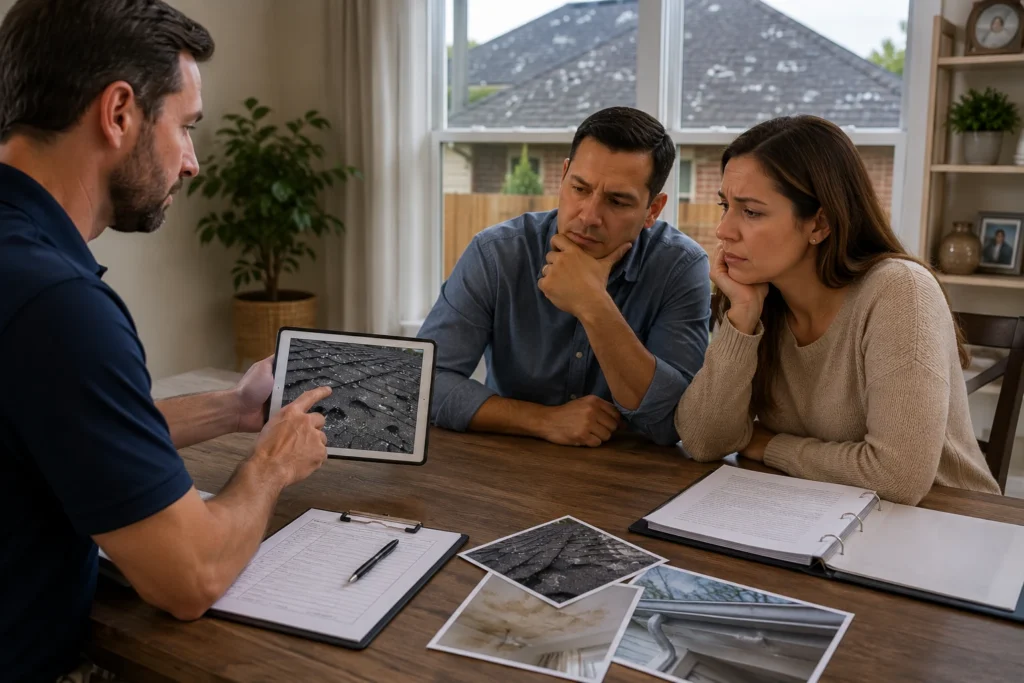
Hailstorms can turn a normal week into chaos fast. One storm rolls through Brownsville. The roof takes a hit. Water stains appear on the ceiling days later. Suddenly, homeowners are dealing with inspections, paperwork, estimates, and confusing insurance conversations they never expected to have. That’s exactly why understanding Public Adjuster vs. Insurance Adjuster for Hail Claims in Brownsville, TX matters so much before accepting any settlement offer.
Many property owners assume the insurance adjuster inspecting the roof is automatically working in their best interest. Sometimes the process goes smoothly. Sometimes it doesn’t. And when hail damage becomes disputed, underestimated, or partially denied, the difference between a public adjuster and an insurance adjuster can directly affect the outcome of the claim. I’ve seen homeowners focus only on the visible roof damage while overlooking code upgrades, ventilation issues, flashing damage, interior moisture intrusion, and supplemental costs that often become major financial burdens later. That’s where proper representation changes everything.
Understanding Hail Damage Claims in Texas
Texas storms are aggressive. South Texas storms can be even worse because high winds often drive hail sideways instead of straight down, creating damage patterns many homeowners never notice from the ground. And here’s the problem.
Roof systems rarely fail all at once. Small hail impacts may weaken shingles, expose underlayment, damage flashing, or reduce granule protection long before leaks become obvious inside the home. Months later, homeowners suddenly discover water intrusion and wonder why the insurance carrier is questioning whether the damage is storm-related. That happens more than people realize.
Why Hail Damage Is Common in South Texas
Brownsville properties deal with several challenges at once:
- Intense heat
- UV exposure
- Sudden storms
- Wind-driven rain
- Aging roofing systems
When hail strikes an already stressed roof, the damage can escalate quickly.
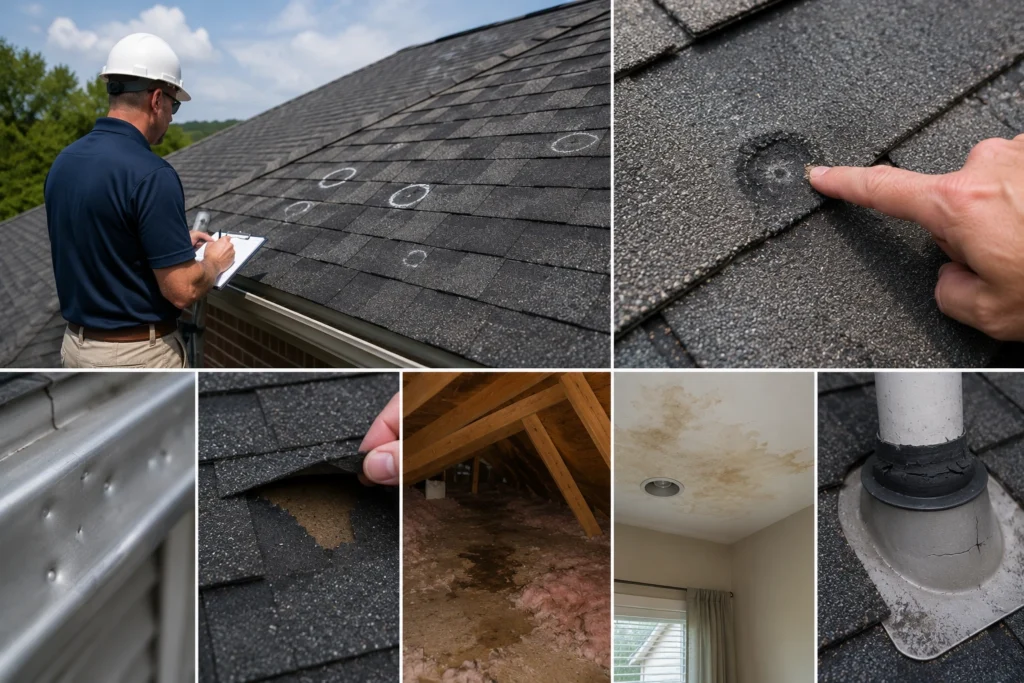
Metal vents dent. Flashing separates. Sealants crack. Shingles lose protective granules. Some damage is visible immediately. Some isn’t.
The Real Cost of Hail Damage
Many homeowners only think about shingles. That’s understandable. But hail claims often involve far more than the roof surface itself.
Common hail-related damage includes:
| Damaged Area | Potential Issue |
| Roofing shingles | Bruising, cracking, granule loss |
| Flashing | Water entry points |
| Gutters | Denting and drainage problems |
| Skylights | Seal failures |
| Interior ceilings | Moisture intrusion |
| Attic ventilation | Reduced airflow efficiency |
| Siding | Impact fractures |
A roof claim can become a full-property restoration issue surprisingly fast.
Why Hail Claims Become Disputed
This is where friction begins.
Insurance companies may argue:
- Damage is cosmetic
- Roof wear is age-related
- Previous deterioration existed before the storm
- Repairs are sufficient instead of replacement
- Interior damage is unrelated
Meanwhile, contractors and homeowners may see something entirely different. That gap creates disputes. And disputes create underpaid claims.
What Is an Insurance Adjuster?
An insurance adjuster investigates claims on behalf of the insurance company. That distinction matters. They evaluate damage, inspect the property, prepare estimates, and help determine what the carrier may pay under the policy. Now, that does not automatically mean insurance adjusters are dishonest. Many are experienced professionals working under intense workloads after storms. But their role is tied to the carrier. That’s important to understand from the start.
Who Insurance Adjusters Work For
Insurance adjusters represent:
- The insurance company
- The carrier’s claim process
- The carrier’s interpretation of the policy
Their responsibility is to evaluate the loss according to company guidelines and policy language. They are not personal advocates for homeowners.
What Insurance Adjusters Typically Do
After a hail claim is filed, insurance adjusters usually:
- Schedule inspections
- Photograph visible damage
- Create repair estimates
- Determine coverage eligibility
- Recommend settlement values
Sometimes inspections are detailed and thorough. Sometimes they move very quickly, especially after major storm events when adjusters are handling dozens of claims per week.
Types of Insurance Adjusters
Not all insurance adjusters work the same way.
Staff Adjusters
These adjusters work directly for the insurance company full-time.
Independent Adjusters
These are third-party adjusters contracted by carriers during busy claim periods.
Catastrophe Adjusters
Often called CAT adjusters, they deploy after large storms and may inspect massive numbers of properties rapidly. That volume can affect inspection depth.
Common Challenges Homeowners Face
Homeowners often encounter problems like:
- Short inspection times
- Missed roof components
- Incomplete estimates
- Communication delays
- Adjuster reassignment during the claim
I’ve seen situations where one adjuster approves partial repairs, then another adjuster reviews the file weeks later and changes the scope entirely. That inconsistency creates frustration fast.
What Is a Public Adjuster?
A public adjuster works for the policyholder instead of the insurance company. That changes the entire dynamic. Public adjusters represent homeowners during the claim process and focus on maximizing legitimate claim recovery based on the policy and documented damage.
Who Public Adjusters Represent
Public adjusters work exclusively for:
- Homeowners
- Property owners
- Business owners
Their responsibility is to advocate for the insured party. That means their priorities are very different from carrier-employed adjusters.
What Public Adjusters Handle
A public adjuster may assist with:
- Detailed inspections
- Claim documentation
- Policy analysis
- Estimate reviews
- Supplemental claims
- Negotiations
- Communication management
For many homeowners, that alone removes a huge amount of stress.
Why Public Adjusters Matter During Hail Claims
Hail damage can be deceptively complex. One missed issue can create thousands in future repair costs.
Public adjusters often focus heavily on:
- Hidden moisture damage
- Matching materials
- Code upgrades
- Flashing systems
- Ventilation deficiencies
- Underlayment requirements
Those details frequently become supplemental claim items later.
How Public Adjusters Get Paid
Most public adjusters work on a contingency fee basis.
That means:
- No large upfront payment
- Fee is usually a percentage of the settlement
- Payment occurs only if compensation is recovered
Homeowners should always review contracts carefully before hiring representation.
Public Adjuster vs. Insurance Adjuster for Hail Claims in Brownsville, TX
This comparison matters because homeowners often confuse the two roles. They are not the same. Not even close.
Side-by-Side Comparison
| Category | Insurance Adjuster | Public Adjuster |
| Represents | Insurance company | Policyholder |
| Primary Goal | Evaluate claim for carrier | Maximize legitimate recovery |
| Payment Source | Insurance company | Contingency fee from settlement |
| Inspection Focus | Carrier-approved scope | Full property damage scope |
| Negotiation Role | Works for carrier interests | Negotiates for homeowner |
| Supplemental Claims | May limit additions | Often pursues overlooked items |
| Policy Interpretation | Carrier perspective | Policyholder advocacy |
| Communication | Carrier-controlled | Client-focused |
The Biggest Difference Is Representation
This is the heart of the entire discussion around Public Adjuster vs. Insurance Adjuster for Hail Claims in Brownsville, TX. Representation changes leverage. An insurance adjuster may attempt to resolve the claim quickly and efficiently. A public adjuster, meanwhile, may challenge missing items, question depreciation calculations, and pursue additional documentation to support expanded coverage. That can significantly affect settlement outcomes.
How Insurance Adjusters Evaluate Hail Damage
Insurance inspections usually focus on identifying direct physical loss. That sounds straightforward. In reality, it gets complicated.
What They Look For
Insurance adjusters commonly inspect:
- Shingle bruising
- Impact marks
- Granule displacement
- Metal dents
- Soft spots
- Water intrusion signs
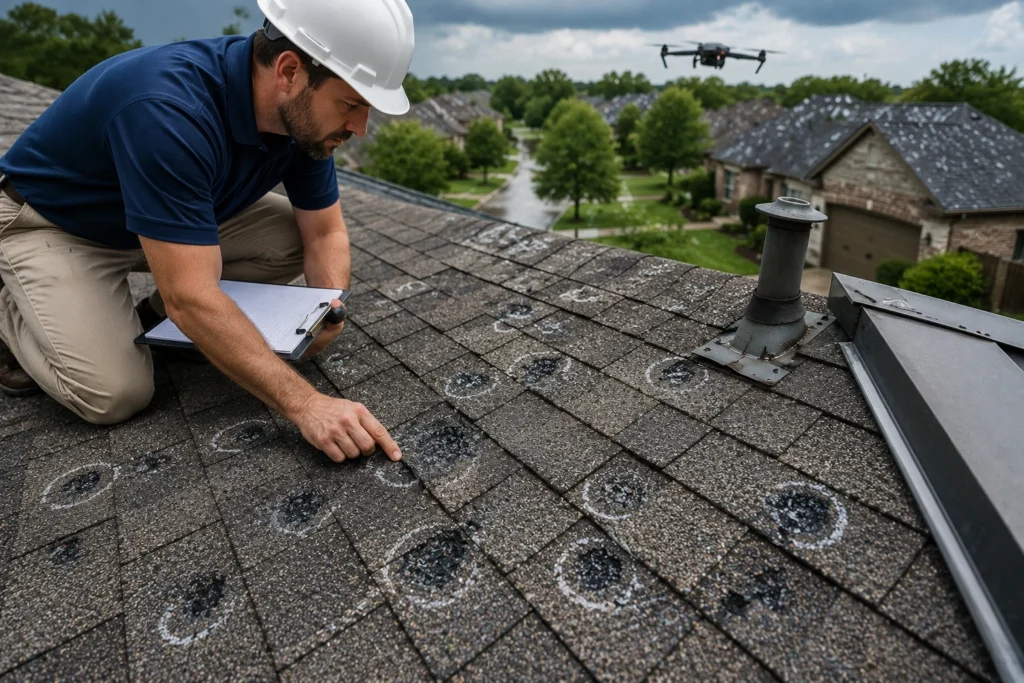
Some inspections include drone imaging or ladder-assisted roof access. Others rely heavily on visual spot checks.
Why Some Damage Gets Missed
Several factors can limit inspections:
- Steep roof pitch
- Wet roof surfaces
- Time pressure
- Heat-related shingle wear confusion
- Limited attic access
And honestly? Some hail impacts simply do not appear obvious initially. Damage evolves over time.
Cosmetic vs Functional Damage Debates
This becomes one of the biggest claim arguments. Insurance carriers may classify certain impacts as cosmetic damage only, particularly on metal surfaces. Homeowners and contractors may argue those same impacts compromise long-term roof performance. That disagreement can heavily influence payout amounts.
How Public Adjusters Build Stronger Hail Claims
Strong claims rely on evidence. Not emotion. That distinction matters enormously.
Detailed Roof Documentation
Public adjusters often create comprehensive documentation packages including:
- High-resolution photos
- Moisture mapping
- Roof measurements
- Drone imaging
- Weather reports
- Contractor evaluations
The more organized the evidence, the harder it becomes to dismiss claim concerns.
Policy Interpretation and Coverage Analysis
Insurance policies are dense. And many homeowners never read the full language until after a storm.
Public adjusters often examine:
- Matching provisions
- Ordinance and law coverage
- Deductible calculations
- Replacement cost terms
- Actual cash value limitations
These details can significantly alter claim payouts. Some claims increase substantially after policy analysis reveals overlooked coverage provisions.
Supplemental Damage Identification
This is huge.
Many initial estimates fail to include:
- Flashing replacement
- Ventilation corrections
- Decking issues
- Underlayment replacement
- Code-required upgrades
Those items frequently surface later during construction. That’s why supplemental claims become common in Texas hail losses.
Using Evidence Instead of Emotion
Strong public adjusters rely on organized evidence instead of emotional arguments. That may include meteorological reports, contractor estimates, moisture readings, repair invoices, and even advanced inspection methods related to spectroscopy when evaluating material deterioration and surface impact patterns. The stronger the documentation package becomes, the harder it is for carriers to dismiss legitimate storm-related damage.
Common Reasons Brownsville Hail Claims Become Underpaid
Underpaid claims usually happen because something was overlooked. Or underestimated. Or disputed.
Incomplete Roof Measurements
Small measurement errors create major estimate differences. A few missing roofing squares can dramatically reduce settlement values.
Missing Line Items
Commonly overlooked items include:
- Starter shingles
- Ridge caps
- Flashing
- Ice and water barriers
- Permit costs
- Debris removal
Those omissions add up quickly.
Improper Depreciation
Some policies apply depreciation differently depending on:
- Roof age
- Material type
- Replacement cost provisions
Incorrect calculations may reduce payouts unnecessarily.
Overlooked Interior Damage
Minor ceiling stains may indicate:
- Insulation saturation
- Hidden moisture
- Mold risks
- Drywall deterioration
Interior damage often expands after the initial inspection.
Insufficient Code Upgrade Allowances
Texas building codes evolve constantly.
Older roofing systems may require upgrades during replacement, creating additional expenses carriers sometimes dispute initially.
Hail Damage Claim Supplements
Hail claims rarely stay static after repairs begin. Once roofing materials are removed, contractors often discover additional damage hidden beneath the surface. That is why supplemental claims become a major part of many Texas roof losses. Proper documentation and timely communication can significantly affect whether those added repair costs are approved or disputed.
Supplement requests often involve:
- Decking replacement
- Additional flashing repairs
- Wet insulation
- Ventilation corrections
- Code-required upgrades
- Structural concerns hidden beneath shingles
This is another major reason the conversation around Public Adjuster vs. Insurance Adjuster for Hail Claims in Brownsville, TX becomes so important. Supplemental negotiations can dramatically influence the final payout amount.
When Should You Hire a Public Adjuster?
Not every claim requires outside representation. But some absolutely benefit from it.
Signs You May Need Help
Consider professional representation if:
- The claim was denied
- Settlement feels too low
- Damage was partially approved
- Communication becomes inconsistent
- Repairs reveal additional issues
- Supplemental requests are ignored
Those are major warning signs.
Situations Where Public Adjusters Add Major Value
Public adjusters are especially useful during:
- Large-loss claims
- Commercial roof disputes
- Complex roofing systems
- Multiple-building claims
- Delayed claim situations
The larger the financial exposure, the more valuable detailed claim management becomes.
Can You Hire a Public Adjuster After Filing?
Yes.
Many homeowners hire public adjusters:
- After receiving estimates
- After partial denials
- During supplemental disputes
- After communication problems develop
It is not always necessary to hire one immediately after the storm.
Situations Where an Insurance Adjuster May Be Enough
Balance matters here. Not every claim becomes adversarial. Some claims are handled fairly and efficiently from the beginning.
Minor Straightforward Claims
Smaller damage events with:
- Clear documentation
- Simple repairs
- Minimal dispute potential
may resolve without additional representation.
Cooperative Carrier Responses
Some insurance companies:
- Respond quickly
- Communicate clearly
- Approve reasonable scopes
- Address supplements fairly
When that happens, homeowners may not need additional assistance.
Mistakes Homeowners Make During Hail Claims
This is where many claims begin to unravel.
Waiting Too Long
Time matters.
Delays can:
- Worsen moisture damage
- Complicate inspections
- Create causation disputes
- Reduce evidence quality
Document damage immediately.
Accepting the First Offer Too Quickly
Initial estimates are not always final. Especially with roofing claims. Supplements are common because hidden damage often appears after tear-off begins.
Failing to Read the Policy
Most homeowners never review:
- Deductibles
- Coverage limits
- Exclusions
- Endorsements
Until there’s a problem. That’s risky.
Poor Documentation
Keep:
- Photos
- Inspection reports
- Contractor estimates
- Communication logs
- Repair receipts
Organization strengthens claims dramatically.
Assuming the Insurance Adjuster Represents Them
This misunderstanding causes major problems during hail disputes. Again, the difference between Public Adjuster vs. Insurance Adjuster for Hail Claims in Brownsville, TX comes down to representation and priorities. Understanding that early helps homeowners make smarter decisions.
The Role of Local Experience in Brownsville Hail Claims
Local experience matters more than many people realize. Construction pricing differs by region. Storm behavior differs by region. Roofing practices differ by region. That affects claims.
Why Regional Costs Matter
Labor costs. Material availability. Permit pricing. Contractor demand after storms.
All of those influence restoration expenses in Brownsville.
Understanding South Texas Storm Conditions
South Texas storms often involve:
- Wind-driven hail
- Sudden temperature shifts
- Heavy rain exposure
- Prolonged humidity
Those conditions accelerate roof deterioration after impacts occur.
Local Building Code Knowledge
Older roofs may not meet current requirements for:
- Flashing
- Ventilation
- Fastener placement
- Underlayment systems
Code compliance can become a major supplemental issue during repairs.
Local Claim Experience Can Affect Outcomes
Professionals familiar with Brownsville-area roofing systems and claim patterns may identify:
- Regional construction practices
- Storm-specific damage trends
- Common carrier disputes
- Local repair pricing differences
That local perspective can strengthen claim accuracy.
Questions to Ask Before Hiring Any Adjuster
Do not hire blindly. Ask direct questions.
Licensing and Experience
- Are they licensed in Texas?
- How much hail claim experience do they have?
- Have they handled South Texas claims before?
Inspection Process
- How detailed are inspections?
- Will they inspect the attic?
- Do they use drone imaging?
Communication Expectations
- Who handles updates?
- How often will communication occur?
- Will they respond during supplemental disputes?
Fee Transparency
- What percentage do they charge?
- Are there cancellation clauses?
- Are supplemental negotiations included?
Clear answers matter. Vague answers are warning signs.
Final Thoughts
Hail claims can become financially significant very quickly. What initially looks like a few damaged shingles may evolve into a much larger roofing, ventilation, and interior restoration issue once repairs begin. That’s why understanding Public Adjuster vs. Insurance Adjuster for Hail Claims in Brownsville, TX is so important before accepting any settlement offer.
Insurance adjusters evaluate claims for carriers. Public adjusters represent policyholders. That distinction shapes inspections, negotiations, documentation, and often the final settlement itself. Some claims resolve smoothly without conflict. Others require extensive supplemental negotiations and deeper policy analysis. The key is knowing when additional representation may help protect your financial interests.
For homeowners in Brownsville dealing with hail damage, preparation matters. Documentation matters. Understanding your policy matters. And most importantly, knowing who is actually representing your interests matters most of all. Because once the roof replacement begins, missed damage becomes very expensive.
FAQs
An insurance adjuster works for the insurance company, while a public adjuster represents the policyholder during the claim process.
If your hail claim is delayed, underpaid, or disputed, a public adjuster may help strengthen your claim documentation and negotiations.
Yes. Fast inspections, roof accessibility issues, and hidden damage can sometimes lead to incomplete evaluations.
Yes. Public adjusters often assist with supplemental claims when additional damage is discovered during repairs.
Adjusters usually inspect shingles, flashing, gutters, vents, and interior areas for signs of storm-related impacts.
Yes. Public adjusters in Texas must meet state licensing requirements before representing policyholders.
In some situations, supplemental damage may allow portions of the claim to be revisited, depending on policy terms and timelines.
Granule loss, bruised shingles, dented metal components, cracked flashing, and interior leaks are common warning signs.
Not always. The repair scope depends on the extent of the damage, roof age, material condition, and local code requirements.
Disputes commonly involve cosmetic versus functional damage, depreciation calculations, and missing repair items.