
Texas storms move fast. One afternoon your roof looks perfectly fine. A few minutes later, your neighborhood sounds like baseballs hitting metal. Then comes the stress. Water spots. Missing shingles. Insurance paperwork. Confusion. That is exactly why understanding a proper roof hail damage insurance claim Texas process matters so much. Many homeowners underestimate hail damage at first. I’ve seen roofs that looked “mostly okay” from the driveway but had serious bruising, fractured shingles, hidden moisture intrusion, and damaged flashing once inspected properly. The scary part? Those overlooked issues can shorten the life of the roof dramatically.
A strong hail claim is not about arguing louder. It is about documenting better. This guide breaks everything down step by step. We’ll cover how to identify damage by roof type, what to do immediately after a storm, how to document evidence properly, what insurance carriers often miss, how supplements work, and why public adjusters frequently change the outcome of complex claims. If you are dealing with a hail damage on roof insurance claim, this is the detailed resource you want bookmarked.
Why Hail Damage Creates So Many Problems for Homeowners
Hail damage is deceptive. Some storms leave obvious destruction behind. Broken windows. Bent gutters. Torn shingles. Easy to spot. Others are subtle. And those subtle storms often create the biggest insurance disputes later. A roof can sustain significant functional damage without leaking immediately. That delay creates confusion for homeowners because they assume no leak means no problem.
Unfortunately, roofing systems do not work that way. Tiny fractures allow moisture intrusion over time. Granule loss weakens UV protection. Metal seams separate gradually. Tile underlayment begins deteriorating quietly beneath the surface. Months later, the homeowner discovers staining inside the house and suddenly the insurance company questions whether the storm actually caused the problem.
That is where documentation becomes everything. In Texas, hail claims also become difficult because carriers process enormous claim volume after large storms. Adjusters are often handling dozens of inspections weekly during catastrophe season. Fast inspections sometimes result in incomplete scopes or overlooked damage. That does not automatically mean bad intentions. But it absolutely increases the chance of missed items. Especially in storm-heavy areas like Brownsville, where severe weather can create repeated roof impacts over time.
How to Identify Hail Damage by Roof Type
Not all roofing systems react to hail the same way. This matters enormously during a hail roof damage insurance claim because each roof type requires a different inspection approach. Let’s break it down.
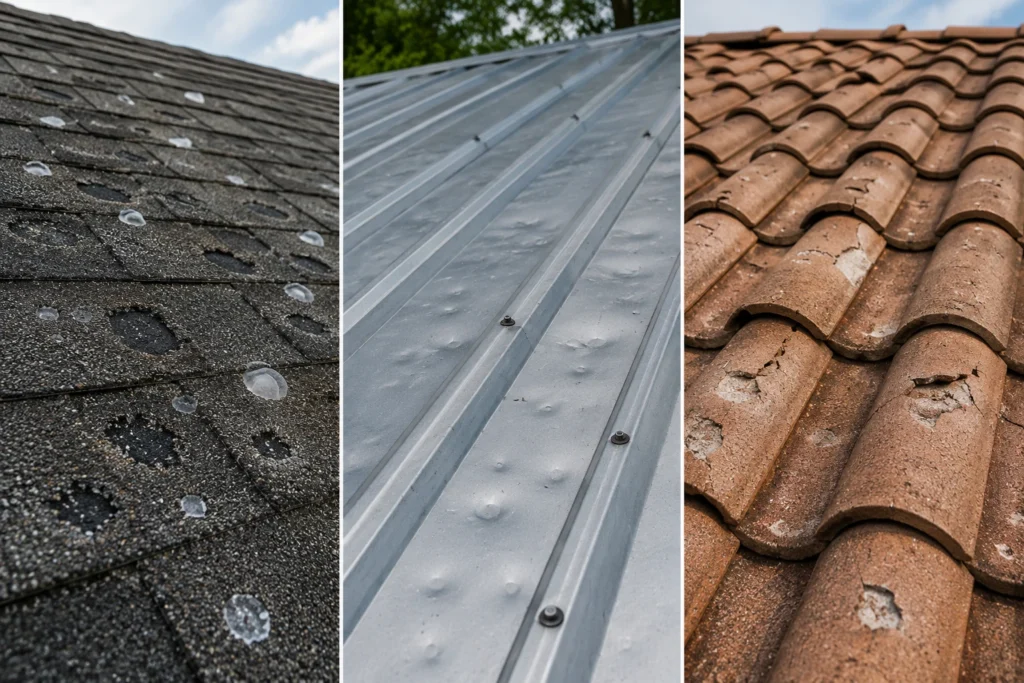
Asphalt Shingle Hail Damage
Asphalt shingles are the most common residential roofing material in Texas. They are also one of the most misunderstood during hail inspections.
Here are common signs of legitimate hail damage:
- Circular bruising
- Granule displacement
- Exposed asphalt matting
- Soft impact spots
- Edge cracking
- Random impact patterns
A bruised shingle often feels soft when pressed carefully. The protective granules become displaced, exposing the underlying material to UV deterioration. That damage may not leak immediately.
But over time, deterioration accelerates. One of the biggest problems during a hail damage on roof insurance claim is distinguishing storm damage from ordinary aging. Carriers frequently argue that blistering, thermal cracking, or wear and tear caused the issue instead of hail. This is why proper inspection technique matters so much.
Experienced inspectors evaluate:
- Directional strike patterns
- Collateral exterior damage
- Fresh granule displacement
- Fracture consistency
- Storm-date correlation
That broader context strengthens the claim substantially.
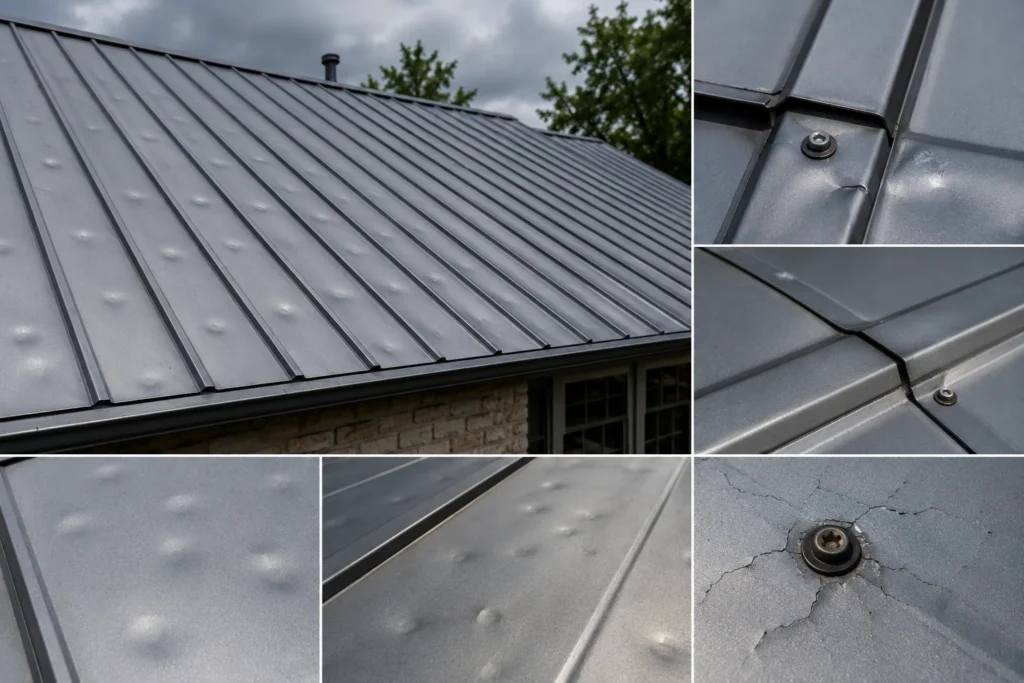
Metal Roof Hail Damage
Metal roofing creates a completely different inspection challenge. Some dents are cosmetic. Others are functional. And that distinction becomes extremely important during a roof hail damage insurance claim Texas process.
Functional metal roof damage may include:
- Seam separation
- Fastener compromise
- Coating fractures
- Lock deformation
- Water-channel disruption
Many homeowners assume dents alone guarantee coverage. Not always. Some policies contain cosmetic damage exclusions specifically for metal roofing systems. That means appearance-related dents may not qualify unless the damage affects functionality. This is where detailed policy review becomes critical.
Another issue? Lighting conditions during inspections. Metal damage can disappear visually depending on sun angle. Experienced inspectors often evaluate metal roofing during multiple lighting conditions because shallow dents become easier to identify when shadows shift. That level of detail matters.
Tile Roof Hail Damage
Tile roofing looks durable because it is durable. But hail still causes serious problems.
Tile damage often includes:
- Corner fractures
- Impact cracks
- Surface chipping
- Underlayment exposure
- Broken fastening points
The difficult part is that some cracked tiles are not obvious from the ground. Even worse, displaced tiles can expose underlayment beneath the system without immediate visible leakage inside the home. Tile roofs also create repair complexity.
Matching discontinued tiles becomes difficult. Partial repairs may not restore proper waterproofing integrity. And labor costs can increase quickly because tile systems require specialized handling. Those costs sometimes get underestimated during carrier inspections.
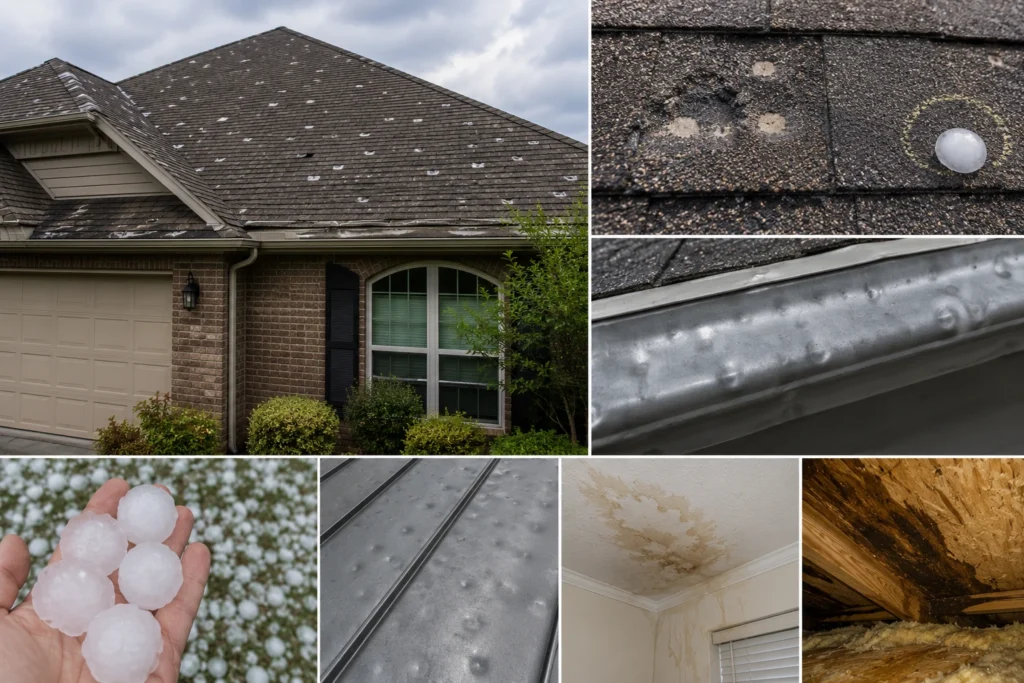
Exterior Damage That Strengthens Your Claim
Roof damage alone rarely tells the full story. Strong hail claims usually include collateral evidence.
Inspect these areas carefully:
| Exterior Area | Potential Hail Evidence |
| Gutters | Dents and impact marks |
| Downspouts | Circular indentations |
| Window screens | Tears or punctures |
| HVAC units | Bent condenser fins |
| Garage doors | Surface dents |
| Fences | Fresh splintering or marks |
| Soft metals | Clear impact strikes |
Collateral damage creates consistency. That consistency strengthens credibility during a hail roof damage insurance review.
Immediate Steps to Take After a Hailstorm
The hours immediately after a storm matter more than most homeowners realize. Evidence disappears quickly. Contractors begin canvassing neighborhoods. Temporary repairs happen fast. Water dries. Debris gets removed. Roofing materials shift. The earlier documentation begins, the stronger the claim usually becomes.
Prioritize Safety First
Do not rush onto the roof. Seriously. Wet roofing surfaces become extremely dangerous after storms. Loose shingles, slick metal panels, and hidden structural damage create major injury risks.
Instead:
- Inspect from the ground initially
- Use binoculars if needed
- Watch for downed electrical lines
- Avoid attic areas with active leaks near wiring
- Contact professionals for elevated inspections
No insurance claim is worth a fall injury.
Photograph Everything Immediately
This is one of the biggest mistakes homeowners make. They wait. Do not wait. Take wide-angle and close-up photographs of:
- Every roof slope visible from the ground
- Gutters
- Downspouts
- Screens
- Siding
- HVAC systems
- Interior staining
- Fallen tree limbs
- Hail accumulation
Organize photos by date and area. Good documentation creates leverage later. Poor documentation creates arguments. Many homeowners search for guides on “How to Document Hail Damage for an Insurance Claim” after storms because strong evidence often determines whether the carrier approves, delays, or disputes portions of the loss.
Prevent Additional Damage
Insurance policies generally require homeowners to mitigate further damage after a loss. That means reasonable temporary protection matters.
Examples include:
- Emergency tarping
- Water extraction
- Interior containment
- Debris removal
- Temporary patching
Keep every receipt. Every single one. Temporary repair costs may become reimbursable later during the hail damage on roof insurance claim process.
Contact the Insurance Carrier Promptly
Open the claim quickly. That does not mean rushing blindly through the process. It simply means establishing the claim officially and documenting storm timing.
Basic information usually includes:
- Date of loss
- Type of storm event
- Observed damage
- Emergency repairs performed
- Contact information
Avoid exaggeration. Stick to facts. Professional, organized communication almost always works better.
How to Document Damage for Your Claim
This is where strong claims separate from weak ones. Documentation wins disputes. Always.
Build a Complete Photo Inventory
Do not take random photos. Take organized photos.
Create folders for:
- Roof elevations
- Interior leaks
- Soft metal impacts
- Detached structures
- Temporary repairs
- Contractor findings
Use both:
- Wide-angle context photos
- Close-up detail photos
That combination matters because adjusters need both overall context and specific evidence.
Keep All Claim Records Organized
The strongest claims usually have the strongest organization.
Store:
- Claim numbers
- Adjuster names
- Inspection dates
- Emails
- Estimates
- Receipts
- Weather reports
- Contractor notes
Cloud storage helps enormously here. If paperwork gets lost later, digital backups save headaches. Proper documentation during complex insurance disputes often requires an almost palimpsest like review of roofing history, prior repairs, storm timelines, and layered inspection evidence.
Use Professional Roofing Reports Carefully
Roofing contractor inspections can help significantly. But vague reports weaken claims.
A useful inspection report should include:
- Specific damage locations
- Photographs
- Measurement details
- Material identification
- Recommended repairs
- Supporting observations
The more detailed the documentation, the harder it becomes to dismiss legitimate damage.
Build a Timeline
Chronology matters during a roof hail damage insurance claim Texas review. Create a simple timeline:
| Event | Date |
| Hailstorm occurred | Example: April 12 |
| Damage discovered | April 13 |
| Temporary repairs | April 14 |
| Carrier notified | April 15 |
| Inspection completed | April 20 |
Timelines reduce confusion later. They also strengthen consistency during disputes.
What Insurance Carriers Commonly Miss in Their Scope
This section is incredibly important. Many homeowners assume the first estimate is final. It usually is not. Especially after large Texas hailstorms.
Roofing Measurements
Small measurement errors create large payment differences.
Common issues include:
- Incorrect roof dimensions
- Missing waste factors
- Incomplete ridge calculations
- Missing starter strips
- Omitted flashing components
Those omissions add up quickly. Thousands of dollars can disappear through incomplete scoping.
Code Upgrade Items
Building codes change. Insurance scopes sometimes lag behind those updates.
Potentially overlooked items include:
- Ice and water barriers
- Drip edge requirements
- Ventilation improvements
- Flashing updates
- Fastener requirements
Code-related supplements are extremely common during hail damage on roof insurance claim negotiations.
Overlooked Exterior Components
The roof is not always the only damaged item. Commonly missed components include:
- Fence staining
- Detached garages
- Mailboxes
- Patio covers
- Gutters
- Window screens
- Siding
A rushed inspection may focus heavily on shingles while overlooking supporting exterior damage.
Interior Damage Gets Minimized Too Often
This happens constantly. Minor ceiling staining may indicate larger hidden moisture intrusion behind insulation or drywall systems.
Potential overlooked interior damage includes:
- Saturated insulation
- Hidden mold growth
- Texture matching
- Paint blending
- Flooring damage
Interior restoration costs can become substantial if moisture remains untreated. During large storm seasons, disputes involving “Hail Damage Claim Supplements: What Carriers Miss in Their Scope” become increasingly common because hidden roofing components and code-related items are often discovered after tear-off begins.
Understanding the Supplement Process
Supplements are normal. Let’s clear that up immediately. A supplement is not claim inflation. It is simply an adjustment made after additional legitimate damage or required work becomes identified. And supplements happen constantly in Texas hail claims.
Why Supplements Happen So Often
Large storms create fast inspections. Fast inspections create missed items. Hidden roofing components often become visible only after tear-off begins.
For example:
- Rotten decking
- Additional flashing damage
- Underlayment deterioration
- Ventilation deficiencies
- Structural concerns
These issues may not appear during the initial inspection. That is why supplements exist.
Common Supplement Items
Here are examples frequently added later:
| Supplement Item | Why It Gets Missed |
| Deck replacement | Hidden beneath shingles |
| Flashing replacement | Covered initially |
| Code upgrades | Not included originally |
| Ventilation changes | Requires detailed review |
| Additional labor | Discovered during repairs |
The supplement process corrects incomplete scopes. That is its purpose.
How Supplements Are Properly Supported
Strong supplements require evidence.
That evidence may include:
- Tear-off photos
- Contractor documentation
- Code references
- Updated estimates
- Moisture readings
The stronger the support, the smoother negotiations usually become.
Why Homeowners Should Understand Xactimate
You do not need to become an estimator. But basic estimate literacy helps tremendously. Most carriers use estimating platforms like Xactimate to build claim scopes and pricing. Understanding simple concepts improves communication dramatically.
Important Estimate Components
Review estimates for:
- Material quantities
- Waste calculations
- Labor categories
- Line-item descriptions
- Removal costs
- Detach and reset operations
Missing line items often create underpayments. And many homeowners never realize what was omitted.
Common Estimate Problems
Watch carefully for:
- Generic pricing
- Missing accessories
- Incorrect material types
- Incomplete labor calculations
- Underestimated steep charges
Small estimate details create major settlement differences.
What to Do If Your Claim Gets Denied
Denials feel overwhelming. But denial does not automatically mean the case is over.
Common Reasons Claims Get Denied
Carriers may cite:
- Wear and tear
- Prior damage
- Improper maintenance
- Insufficient evidence
- Delayed reporting
Some denials are valid.Others deserve closer review.
Review Everything Carefully
Read:
- The denial letter
- Inspection findings
- Policy language
- Exclusions
- Damage explanations
Look for inconsistencies. Compare photographs against conclusions. Organized review matters. Homeowners researching “What to Do If Your Hail Claim Was Denied in Brownsville , TX” should start by reviewing the denial letter carefully, organizing additional evidence, and requesting clarification on the carrier’s inspection findings.
Request Reinspection if Necessary
Additional inspections sometimes change outcomes significantly. Especially when stronger documentation becomes available later.
Helpful evidence may include:
- Independent inspections
- Contractor reports
- Additional photos
- Storm-date verification
- Engineering evaluations
Stay factual during disputes. That approach works better.
Public Adjuster vs Insurance Adjuster for Hail Claims in Texas
This distinction matters enormously. Carrier adjusters work for the insurance company. Public adjusters work for policyholders. That difference changes priorities.
What Public Adjusters Actually Do
A public adjuster may assist with:
- Policy review
- Damage documentation
- Scope analysis
- Estimate comparison
- Supplement support
- Negotiation management
The goal is not confrontation. The goal is accuracy.
Why Detailed Claim Preparation Changes Outcomes
Organization creates leverage.
Strong claims usually include:
- Better photographs
- Better timelines
- Better documentation
- Better estimate review
- Better communication tracking
That structure improves negotiation efficiency dramatically. Questions surrounding “Public Adjuster vs. Insurance Adjuster for Hail Claims in Brownsville , TX” usually arise when homeowners feel overwhelmed by inspections, paperwork, estimate discrepancies, or delayed communication during the claims process.
When Homeowners Should Consider Hiring a Public Adjuster
Not every claim requires professional representation. But some situations absolutely benefit from it.
Examples include:
- Large losses
- Claim denials
- Complex roofing systems
- Underpayments
- Commercial properties
- Extensive supplements
In areas like Brownsville, where storms can create widespread claim volume, experienced claim guidance often helps homeowners navigate the process more efficiently.
Practical Tips That Strengthen Roof Claims
Simple habits create major advantages. Here are practical strategies homeowners should follow:
| Smart Action | Why It Helps |
| Photograph damage immediately | Preserves evidence |
| Save all receipts | Supports reimbursement |
| Organize emails | Improves communication clarity |
| Review estimates carefully | Identifies omissions |
| Store records digitally | Prevents data loss |
Small organizational habits produce enormous long-term benefits.
Store Everything Digitally
Cloud storage protects important records during emergencies.
Store:
- Roof photos
- Inspection reports
- Policies
- Estimates
- Communication logs
Future disputes become easier to manage when records remain organized.
Understand Your Policy Before Storm Season
Most homeowners read their policy only after damage occurs. That creates surprises.
Review:
- Deductibles
- Cosmetic exclusions
- Depreciation language
- Matching endorsements
- Coverage limitations
Better understanding creates better expectations.
Consider Impact-Resistant Roofing
Some homeowners upgrade roofing materials after severe hail events.
Potential benefits include:
- Improved durability
- Better impact resistance
- Possible insurance discounts
- Longer roof lifespan
Not every carrier offers discounts, but many consider impact-resistant systems favorably.
Technology Is Changing Hail Claims
Modern inspections continue evolving rapidly.
Today’s claim investigations may involve:
- Drone imaging
- Satellite measurements
- Moisture detection
- Thermal imaging
- Digital measurement reports
Technology improves accuracy. But experience still matters. A drone cannot interpret claim strategy. Software cannot negotiate complex scope disputes. Human expertise remains essential during complicated hail roof damage insurance situations.
Final Thoughts
A successful roof hail damage insurance claim Texas process is rarely about luck. It is about preparation. The homeowners who document quickly, stay organized, understand their estimates, and communicate clearly usually place themselves in much stronger positions during negotiations. Hail damage is stressful. There is no way around that. But confusion decreases dramatically when you understand the process ahead of time.
Inspect carefully. Document thoroughly. Stay organized. Ask questions early. And if the claim becomes complicated, seek experienced guidance before small mistakes turn into expensive long-term problems. For homeowners in Brownsville and throughout Texas, protecting the roof also means protecting the long-term value of the property itself.
FAQs
Most policies require prompt reporting, but deadlines vary by carrier. Filing quickly helps preserve evidence and avoids disputes.
Yes. Small fractures and weakened roofing materials may allow moisture intrusion long after the storm passes.
Not always. Some roofs qualify for repairs, while others require full replacement depending on material type and damage severity.
Photograph roof slopes, gutters, siding, screens, HVAC units, interior stains, and any visible exterior impact damage.
Initial inspections may miss hidden damage, code upgrades, labor costs, or roofing accessories that later require supplements.
A supplement is an additional request for payment when legitimate damage or required repairs were not included initially.
Yes. Functional damage to seams, fasteners, or coatings may qualify even if cosmetic exclusions exist in the policy.
Yes, if needed to prevent additional damage. Keep all receipts and photograph conditions before repairs begin.
You can review the denial, gather additional evidence, request reinspection, and seek professional claim assistance if necessary.
Consider contacting a public adjuster for large losses, underpaid claims, denied claims, or complex roofing systems.